
Synchronization of an Alternator with an Infinite Bus Bar
Theory
Before synchronization, the following conditions must be satisfied:
1. Equality of Voltage
The terminal voltage of both the systems i.e., the incoming alternator and the bus bar voltage (or other alternator) must be the same.
2. Phase Sequence
The phase sequence of both the systems must be the same.
3. Equality of Frequency
The frequency of both the systems must be the same. Voltage equality can be checked using a voltmeter, while phase sequence and frequency are checked using synchronizing methods.
Two synchronizing methods are commonly used:
- Using incandescent lamps
- Using synchroscope
(a) Using Incandescent Lamp Method
Let machine G2 be synchronized with machine G1 already connected to the bus bar using three lamps (L1, L2, L3). These lamps are known as synchronizing lamps.
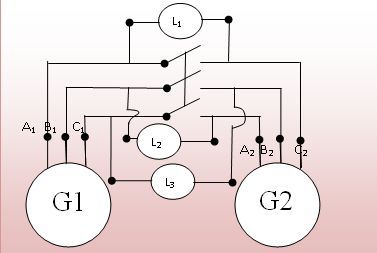
Fig. 1 Synchronization using three lamp method
If machine G2 speed is not equal to machine G1, frequencies differ and phase difference appears between voltages. As a result, lamps flicker alternately bright and dark. Synchronization is done during the middle of the dark period. This is called the Dark Lamp Method.
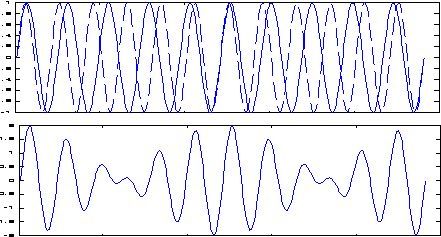
Fig. 2 Waveforms when two systems operate at different frequencies
Lamp L1 is connected between A1–A2, L2 between B1–C2, and L3 between C1–B2. These lamps brighten and darken cyclically depending on whether machine G2 is running fast or slow.
The synchronizing switch is closed when lamp L1 becomes completely dark. This arrangement also indicates whether the incoming machine is slow or fast.
Drawbacks of Lamp Method
- Lamps become dark at about one-third rated voltage, causing faulty synchronization.
- Cannot determine how much the machine is slow or fast.
- Not suitable for high-voltage alternators without step-down transformers.
(b) Synchronization by Synchroscope
A synchroscope indicates the correct instant of closing the synchronizing switch using a rotating pointer.
- Pointer rotates clockwise → Incoming machine is fast
- Pointer rotates anticlockwise → Incoming machine is slow
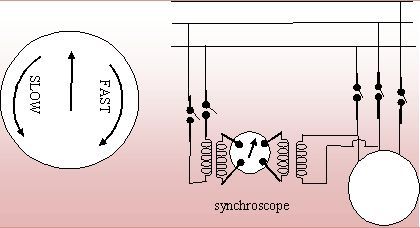
Fig. 3 Synchronizing by Synchroscope
Equipments Required
| Equipment | Image |
|---|---|
| DC Motor – Alternator Set | 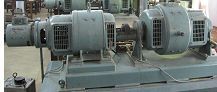 |
| AC Voltmeter | 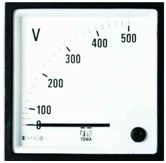 |
| Rheostat | 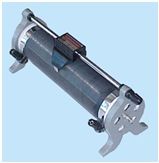 |
| Tachometer | 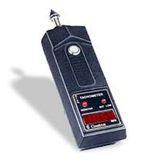 |